
Since you’ve seen “The Exorcist” how about some others?
Halloween is a fantastic holiday. It might not come with the benefit of a day off work or presents or a bunny handing out chocolate eggs, but its got style. And it inspires watching lots of horror, thrillers, and just plain ol’ weird movies to get into its twisted spirit. That being said, Netflix Canada has a great list of flicks to stoke that Halloween fire (and for those who’ve exhausted the classics – The Exorcist, The Thing, Halloween, just to name a few – Netflix has a bit more of an eclectic mix). Check out some recommendations below:
It Follows (Grade: A)
Just released on Netflix Canada on October 19 – if you have not seen this horror movie, go watch it on Netflix now. It’s one of the best horror films in recent memory.
Afflicted (Grade: B)
While generally not a fan of found-footage films, this horror-travelogue has some fun with a classic movie monster and some really cool POV action scenes. Also, it was filmed on a shoe-string budget and made by Canadians, so that’s pretty cool too.
Oculus (Grade: B+)
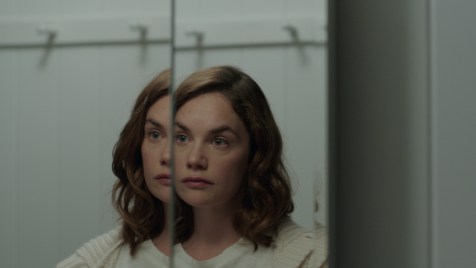
A haunted house movie that works. Especially because its about a haunted mirror. The subject matter is laughable, but the film draws you in with its warped reality and sympathetic characters. It will make you feel crazy.
The Sacrament (Grade: B)
Another found-footage movie filmed under the guise of a VICE documentary about a charismatic cult leader (who everyone creepily calls “Father”). The arrival of the VICE outsiders signals unease…and then bloodshed.
Evil Dead remake (Grade: C+)
Not as kitschy or fun as the beloved original, but the remake has better gore and creepy set-pieces. But Ash is sorely missed.
The Conjuring (Grade: A)
Hide and clap. ‘nough said.
The Cabin in the Woods (Grade: B+)
Not one to start off with if you’re not familiar with horror movies. Plays off on a lot of horror movie stereotypes and cliches, and a ton of fun. Not scary though.
Sinister (Grade: B)
Holy shit, those 8mm family films. Terrifying. The rest of the movie can’t reach the heights of the opening, but pretty creepy overall.
Jacob’s Ladder (Grade: B+)
An oldie but a goodie. A Vietnam vet learns that New York isn’t quite the same as he left it. A bit of a slow burn, but lots of disturbing imagery. The stuff of nightmares.
Orphan (Grade: B)
A movie about an evil child that torments a mother and her family (but mostly the mother). Enjoy it for the thrills and the frustration that no one else can see this child is the devil except the mother (who obviously no one believes – but the film provides a good reason for that). Speaking of evil child films…
We Need to Talk About Kevin (Grade: A)
Not actually a horror film, but a disturbing drama about not bonding with your child. Probably because they’re a psychopath.
1408 (Grade: B+)
John Cusack. Stephen King adaptation. Samuel L. Jackson. And as surprisingly effective one-room horror-thriller. Cusack does great work as a cynical writer who spends a night in a “haunted” hotel room. He learns too late that quotations weren’t needed.
The Faculty (C+)
Just a fun sci-fi horror high school romp. But there is a scene where a scalp falls off in a shower that I’ve never been able to forget…
Tucker and Dale vs Evil (Grade: B)
Another Cabin in the Woods style movie. Two hillbillies keep running into co-eds who end up dying. Good for lighter fare after the heavier stuff.
Session 9 (Grade: B)
Underrated psychological thriller set in an abandoned mental hospital undergoing asbestos removal by a team of workers. Atypically, most of the film is set during the day (i.e. when most people work) but still manages to scare with the claustrophobic set and great cast (David Caruso!).
Leprechaun (Grade: D)
Jennifer Aniston battling a little green man who drops one-liners in an Irish lilt and is compelled to shine all dirty shoes he comes across. Cue dirty gym shoes being thrown to slow him down.
Honourable mentions: Creep (found-footage with Mark Duplass, could be good), the television show Hannibal (specifically, Season 1, Episode 5 will haunt you), Carrie (a classic, but you’ve probably already heard about it), Halloween: Resurrection (Busta Rhymes battles Michael Myers after he says “Trick or Treat…motherfucker!” Absolutely amazing trash), Kiss the Girls (Morgan Freeman/Ashley Judd thriller – formulaic but well done), The Call (Halle Berry as a 911 operator in a race against time to save a girl from a serial killer – a quick watch), Maniac (a horror film shot entirely from the POV of the killer. First ten minutes is great, the rest…not so much.), The Strangers (“Because you were home.”), The American Scream (documentary about homeowners creating the best haunted house).
Happy Halloween!


 Modest Movie